


inpp neurodevelopmental programme

Understanding the developmental foundations behind learning, coordination, attention and regulation.

Could something underneath be making things harder?
You know your child is capable, but some things seem to take far more effort than they should.
Perhaps you've spoken to school, tried different strategies or simply given things time.
Yet something still doesn't quite add up
-

learning feels hard
Your child is bright and capable, but reading, writing, spelling or maths can take lots of effort.
-

concentration & focus
Listening, following instructions or staying focused can be exhausting, particularly in the classroom.
-

sensory needs & overwhelm
Noise, clothing, touch, movement or busy environments can feel hard to manage.
-

taking longer to complete work
Reading, writing or copying can take longer than expected, making schoolwork tiring and frustrating.
-

sitting still & posture
Fidgeting, slumping, constantly changing position can make classroom learning more difficult.
-

trying so hard to hold it together
Holding everything together can leave your child exhausted, overwhelmed or emotional at home.
Looking Beneath the Surface
At WayMaker, we know that what you see on the surface doesn't always tell the whole story.
Sometimes difficulties with learning, concentration, sensory processing, posture or coordination may be connected to how a child's nervous system has developed.
Primitive reflexes are part of our earliest development and are expected to become integrated as the nervous system matures. When some remain active beyond the expected stage, they can sometimes make everyday skills require more effort.
INPP helps us explore whether this could be part of your child's developmental picture.

Signs INPP May Be Worth Exploring
Every child is different, and these signs can have many different causes. An INPP assessment may be worth considering if you notice ongoing difficulties such as:
poor balance, coordination or frequent clumsiness
difficulty catching a ball, swimming, cycling or learning physical skills
handwriting that is slow, effortful or difficult to control
poor posture or difficulty sitting comfortably at a desk
losing their place when reading or difficulty tracking across a page
motion sickness or discomfort with movement
difficulty with sequencing or completing multi-step tasks
These signs don't necessarily mean retained primitive reflexes are present. An assessment helps us understand whether underlying neurodevelopmental factors may be contributing.
What is INPP?
INPP Neurodevelopmental Therapy is a movement-based programme that looks at whether early reflexes are still influencing how easily a child's brain and body work together.
Following a detailed assessment, your child may be given a personalised programme of simple movements to practise at home. These are designed to support the gradual integration of retained reflexes and the development of the underlying foundations needed for learning, coordination and everyday life.
The programme takes time, with regular reviews allowing us to monitor progress and adapt the movements as your child develops.
Find out more about INPP
Your INPP Journey
01 — Let's Talk | Free 30-Minute Call
Start with a free 30-minute call to tell us what's happening for your child. We'll listen to the difficulties you're noticing, answer your questions and consider whether exploring INPP could be helpful.
02 — INPP Questionnaire
We'll ask you to complete a detailed INPP developmental questionnaire. This helps us look more closely at your child's early development and the difficulties you're seeing now.If their questionnaire score indicates that further investigation may be worthwhile, we'll invite you to the next stage.
03 — Parent Consultation £80
Before your child’s assessment, we’ll meet with you to understand their developmental history, the challenges you’re seeing and what everyday life looks like for them.
This helps us see the whole child and build a fuller picture before their INPP assessment.
04 — INPP Assessment | £200
Your child's assessment takes approximately 2½–3 hours and explores their individual neurodevelopmental profile. If INPP is appropriate, we'll create a personalised movement programme and show you and your child exactly what to practise at home.
Need a detailed report?
Following your child's assessment, a detailed written report can be provided if required, outlining the assessment findings and recommendations. This can be useful where information needs to be shared with school or other professionals.
Optional detailed report: m£150
05 — Review & Progress | £80
We'll meet approximately every seven weeks to review your child's progress, repeat relevant parts of the assessment and adapt their individual programme as their development changes.
INPP is a gradual process. We'll guide you through each stage, so you always know what comes next. n m
You don't have to understand the science or know which reflexes may be involved. We'll explain what we find in clear language and guide you throughout the process.nJourney
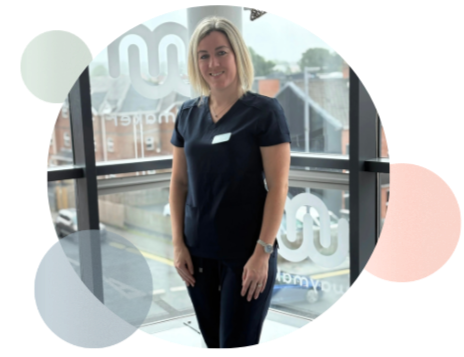
Meet Tara
Tara Cupples is our Neurodevelopmental Practitioner at WayMaker, with specialist training in the INPP Neurodevelopmental Programme and a degree in Children’s Care, Learning and Development Management.
With a warm, holistic approach, Tara looks beyond the difficulties a child is experiencing to understand what may be happening underneath. She guides families through each stage of the INPP journey, making the process feel clear, supportive and manageable.
-
Children with autism, ADHD, dyslexia and sensory processing differences can experience challenges with areas such as coordination, posture, attention, sensory regulation, handwriting and learning. Some neurodivergent children may also show signs of neuromotor immaturity or retained primitive reflexes.
INPP is not a treatment for autism, ADHD and we would never want to change the qualities that make a child who they are.
Instead, an INPP assessment can help us explore whether aspects of underlying neuromotor development may be adding an additional layer of difficulty for an individual child.
Whether your child has a diagnosis, is waiting for an assessment or simply has difficulties that you are trying to understand, we focus on the child in front of us rather than the label.
-
INPP is a structured neurodevelopmental programme that assesses for signs of neuromotor immaturity, including retained primitive reflexes, and provides an individual programme of specific developmental movements.
Brain Balance takes a broader approach, using movement, rhythm and sensory activities to develop foundational skills that support regulation, coordination, attention and learning.
You don’t need to know which approach your child needs.
We look at the whole child and help you understand the most appropriate place to start.
-
Does my child need a diagnosis to access INPP?
No. Your child does not need a diagnosis to complete an INPP assessment. We look at their individual developmental history and the difficulties they are experiencing rather than requiring a particular diagnosis.
What age is INPP suitable for?
Suitability depends on the individual child and the type of INPP assessment or programme being considered. We can discuss your child’s age, development and current difficulties with you before arranging an assessment.
How long does the INPP Programme take?
INPP is a developmental programme rather than a quick intervention. Children progress at different rates, but programmes commonly continue over a number of months, with regular reviews along the way. We will explain the likely commitment before you begin.
Do we need to do exercises at home?
Yes. The programme involves a short sequence of specific movements practised regularly at home. Consistency is an important part of the programme, but you will not be expected to work it out yourself. We demonstrate each movement and make sure you feel comfortable with what you are doing.
Does INPP treat ADHD or autism?
No. INPP should not be presented as a treatment or cure for ADHD, autism or other neurodevelopmental conditions. The programme assesses aspects of neuromotor development that may sometimes be contributing an additional difficulty for a child.
Will INPP help at school?
The aim of the programme is to support underlying neuromotor development. Where difficulties in this area are contributing to the effort involved in things such as posture, coordination, handwriting, visual tracking or concentration, parents may notice changes in everyday activities over time. Every child is different, so we do not promise particular academic or behavioural outcomes.
Ready to explore whether INPP
could help your child?

Still Not Sure if INPP Is Right for Your Child?
You don’t need to work that out on your own. Tell us a little about what you are noticing, and we can help you understand whether INPP or another area of support at WayMaker may be the right place to start.


